
Palliative care at home: medical care and end-of-life accompaniment at home
Palliative care at home is a healthcare model aimed at people with advanced, complex chronic diseases, or in the end-of-life phase, whose main objective is to improve the quality of life, relieve suffering, and offer comprehensive accompaniment to both the patient and their family.
Unlike curative treatments, palliative care focuses on symptom control, comfort, and respect for the person's dignity. When performed at home, they allow the patient to remain in an familiar environment, surrounded by loved ones, with specialized medical and nursing care without the need for hospitalization.
This approach combines clinical care, emotional support, and healthcare coordination to offer more humane care adapted to each situation.
When palliative care at home is indicated
Home palliative care is indicated when the disease has no possibility of being cured or when active treatment is no longer the main objective. Some frequent situations are:
- Cancer in advanced stages of the disease
- Advanced heart, respiratory, or kidney failure
- Progressive neurological diseases (ALS, advanced dementias, advanced Parkinson's)
- Situations of extreme frailty or progressive deterioration
- Need for end-of-life care
It is always assessed whether the home is a safe environment and whether there is a family or caregiver support network.
What home palliative care includes
Palliative care at home is comprehensive and multidisciplinary. It may include:
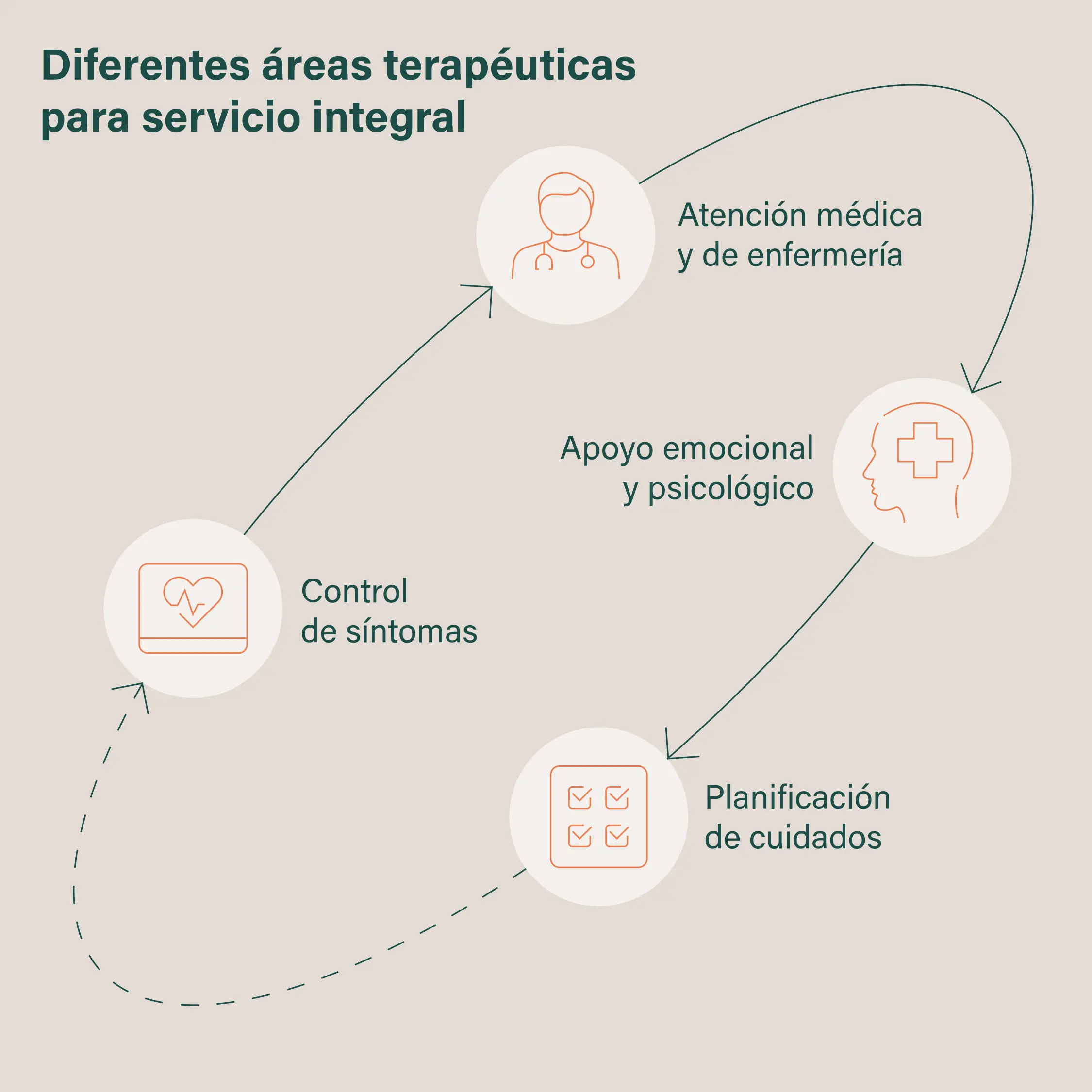
Symptom control
Management of pain, shortness of breath, anxiety, nausea, insomnia, or agitation, with continuous adjustment of treatment.
Medical and nursing care
Clinical follow-up, medication administration, wound care, device control, and complication prevention.
Emotional and psychological support
Accompaniment for the patient and their family to face the disease process, fear, and uncertainty.
Care planning
Respect for the patient's decisions, adaptation of treatments, and advance planning according to their values and preferences.
Benefits of home palliative care
More comfort and fewer hospitalizations
Receiving palliative care at home reduces urgent transfers and hospital admissions that can be stressful or unbeneficial in advanced stages. The home offers a quieter and more personalized environment.
Greater quality of life
Proper symptom control and the possibility of staying at home help the person maintain their privacy, routines, and close contact with their family.
Family accompaniment
Palliative care teams also care for the caregivers. They offer guidance, training, and continuous support, helping to reduce the emotional burden and feeling of loneliness of caregivers.
The role of specialized teams in home palliative care
At Galeneo, home palliative care relies on a highly coordinated multidisciplinary team comprised of doctors, nurses, and specialists in social and emotional support. Thanks to this organization, each patient receives continuous monitoring, with personalized care plans that adjust to their evolution and needs.
Integration with primary care, hospitals, and specialized services makes it possible to proactively respond to any clinical change, avoiding unnecessary complications and hospitalizations. In addition, Galeneo incorporates telemedicine and remote monitoring tools, facilitating quick consultations, medication adjustments, and direct communication with family members, all without the patient having to leave their home.
This approach guarantees clinical safety, comfort, and comprehensive accompaniment, combining professional excellence with the closeness and peace of mind that only home can offer.
Do you want to know more about our services? Visit our services page or contact us directly.
Bibliography
- Farinha-Costa B, Reis-Pina P. Home Hospitalization in Palliative Care for Advanced Cancer and Dementia: A Systematic Review. J Pain Symptom Manage. 2025 Mar;69(3):289-303. doi: 10.1016/j.jpainsymman.2024.11.013. Epub 2024 Nov 24. PMID: 39586430. Available at: https://pubmed.ncbi.nlm.nih.gov/39586430/
- Wong A, Cooper C, Evans CJ, Rawle MJ, Walters K, Conroy SP, Davies N. Supporting older people through Hospital at Home care: a systematic review of patient, carer and healthcare professionals' perspectives. Age Ageing. 2025 Feb 2;54(2):afaf033. doi: 10.1093/ageing/afaf033. PMID: 39987564; PMCID: PMC11847509. Available at: https://pmc.ncbi.nlm.nih.gov/articles/PMC11847509/