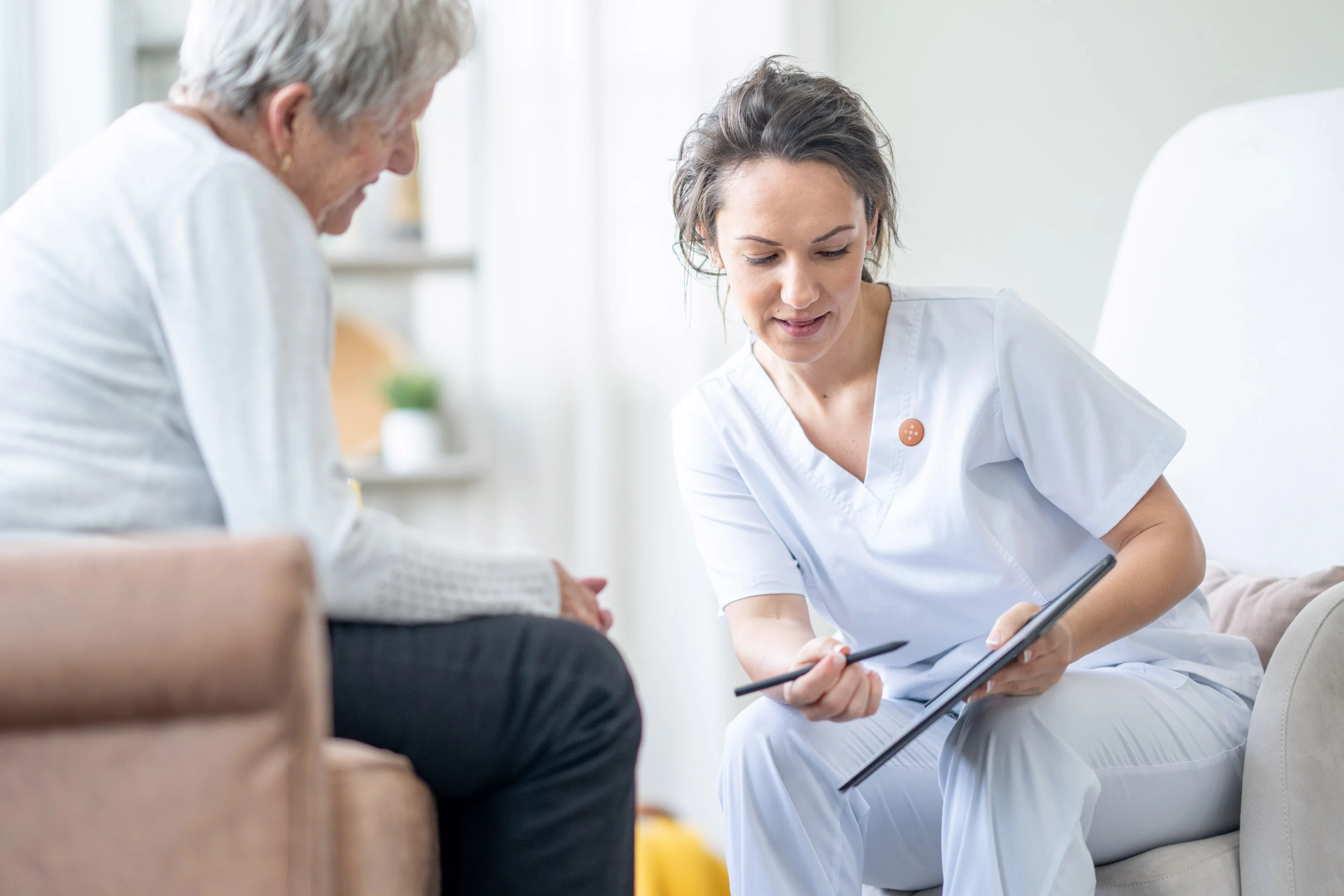
Postoperative Care at Home: Continuity of Care and Safe Recovery After Surgery
A surgical procedure does not end in the operating room. Postoperative recovery, pain control, proper wound healing, and complication prevention are all integral parts of the therapeutic process. In this context, postoperative care plays a decisive role in clinical outcomes and patient experience.
Home healthcare extends medical supervision beyond the hospital, enabling recovery in a familiar environment without losing clinical oversight when needed. This approach is particularly relevant for patients who, after discharge, still require professional follow-up or present risk factors that call for close monitoring.
What Postoperative Care at Home Involves
The postoperative period may involve a wide range of care needs depending on the type of surgery, the patient’s age, and the presence of pre-existing conditions. Home care enables structured follow-up, including symptom monitoring, assessment of surgical wound healing, adjustment of pharmacological treatment, and evaluation of overall health status.
This support facilitates early detection of potential complications such as infections, wound healing issues, or decompensation of chronic conditions, reducing the likelihood of hospital readmissions.
Clinical Benefits of Recovery at Home
When medically appropriate, recovering at home offers significant advantages. The home environment provides greater emotional and physiological stability, promoting rest and reducing stress factors associated with hospital stays.
In addition, avoiding prolonged hospitalization reduces exposure to hospital-acquired infections and supports a gradual return to daily activities. In older or frail patients, this earlier transition to the home environment can be key to preserving independence and preventing functional decline.
Safety and Medical Criteria in Home Follow-Up
Postoperative home care requires prior medical assessment to confirm the patient’s clinical stability and the suitability of the home environment. From there, healthcare follow-up allows continuous monitoring and rapid response to warning signs, always maintaining the option of hospital referral if needed.
This model does not replace the hospital but extends its care capacity beyond its physical walls while maintaining clinical safety standards.

Functional Recovery and Independence After Surgery
Beyond clinical monitoring, one of the main goals of the postoperative period is the patient’s functional recovery. Early mobilization, gradual adaptation to daily activities, and prevention of complications associated with prolonged rest—such as muscle loss or functional decline—are key elements in post-surgical recovery.
The home setting facilitates a more natural recovery process, allowing care to be integrated into the patient’s real-life context. Professional supervision at home helps identify functional limitations, adjust recommendations, and promote safe recovery, especially in older adults or patients with greater clinical fragility. This approach supports not only surgical healing but also the preservation of independence and quality of life.
The Home as an Extension of the Surgical Process
After surgery, many patients still need healthcare support to complete their recovery. Home care ensures continuity of care, helps resolve clinical concerns, and provides reassurance to both patients and their families during a phase that often involves uncertainty.
At Galeneo, we view postoperative care as an essential part of the surgical treatment. Integrating medical follow-up at home allows us to combine clinical rigor, comfort, and safety, supporting a smoother and more personalized recovery.
Would you like to learn more about our services? Visit our services page or contact us directly.
References
- Ugarte, A., Bachero, I., Cucchiari, D., Sala, M., Pereta, I., Castells, E., Subirana, N., Loscos, A., García, L., Cardozo, C., Rico, V., García-Poutón, N., Torres, M., Lopera, C., Aldea, A., Suárez, A., Coloma, E., Seijas, N., Altés, J., & Nicolás, D. (2024). Effectiveness and Safety of Postoperative Hospital at Home for Surgical Patients: A Cohort Study. Annals of surgery, 279(5), 727–733. https://doi.org/10.1097/SLA.0000000000006180
- Paulson, M. R., Torres-Guzman, R. A., Avila, F. R., Maita, K., Garcia, J. P., Eldaly, A., Palmieri-Serrano, L., Forte, A. J., Thompson, J. C., & Maniaci, M. J. (2022). 85-Year-Old Postsurgical Complex Patient Successfully Managed Remotely at the Novel Mayo Clinic's Hospital at Home. Case reports in vascular medicine, 2022, 1439435. https://doi.org/10.1155/2022/1439435