
Flu vs. cold: how to differentiate the symptoms and when to consult a doctor
The flu and the common cold are very frequent respiratory infections, especially in autumn and winter. Although many people use both terms as if they were the same, they are actually caused by different viruses and can have distinct intensity, progression, and risks.
The common cold is usually caused by rhinoviruses and other mild respiratory viruses. The flu, on the other hand, is caused by the influenza virus, which affects the body more intensely and can cause complications, especially in older adults, patients with chronic diseases, or those with weakened immune systems.
Knowing how to distinguish between the flu and a cold is important to better manage symptoms, avoid contagions, and recognize when it is necessary to receive a medical assessment.

Symptoms of the common cold
A cold usually begins progressively and its symptoms, although annoying, are usually mild and self-limiting. The most common are:
- Nasal congestion and runny nose
- Frequent sneezing
- Mild sore throat
- Light or irritating cough
- Mild general malaise
- Absent or low fever
The person can usually continue with their daily activities, although with less energy. The typical duration is 5 to 7 days, and it rarely produces serious complications in healthy people.
Flu symptoms
The flu usually appears suddenly, with a clear worsening of the general condition. Its symptoms are more intense and systemic:
- High fever (usually greater than 38 °C)
- Marked muscle and joint pain
- Intense fatigue or feeling of exhaustion
- Headache
- Persistent dry cough
- Chills
- Significant general malaise
Unlike a cold, with the flu a person may feel unable to perform normal activities for several days. Cough and fatigue can even last 2 or 3 weeks.
Main differences between the flu and a cold
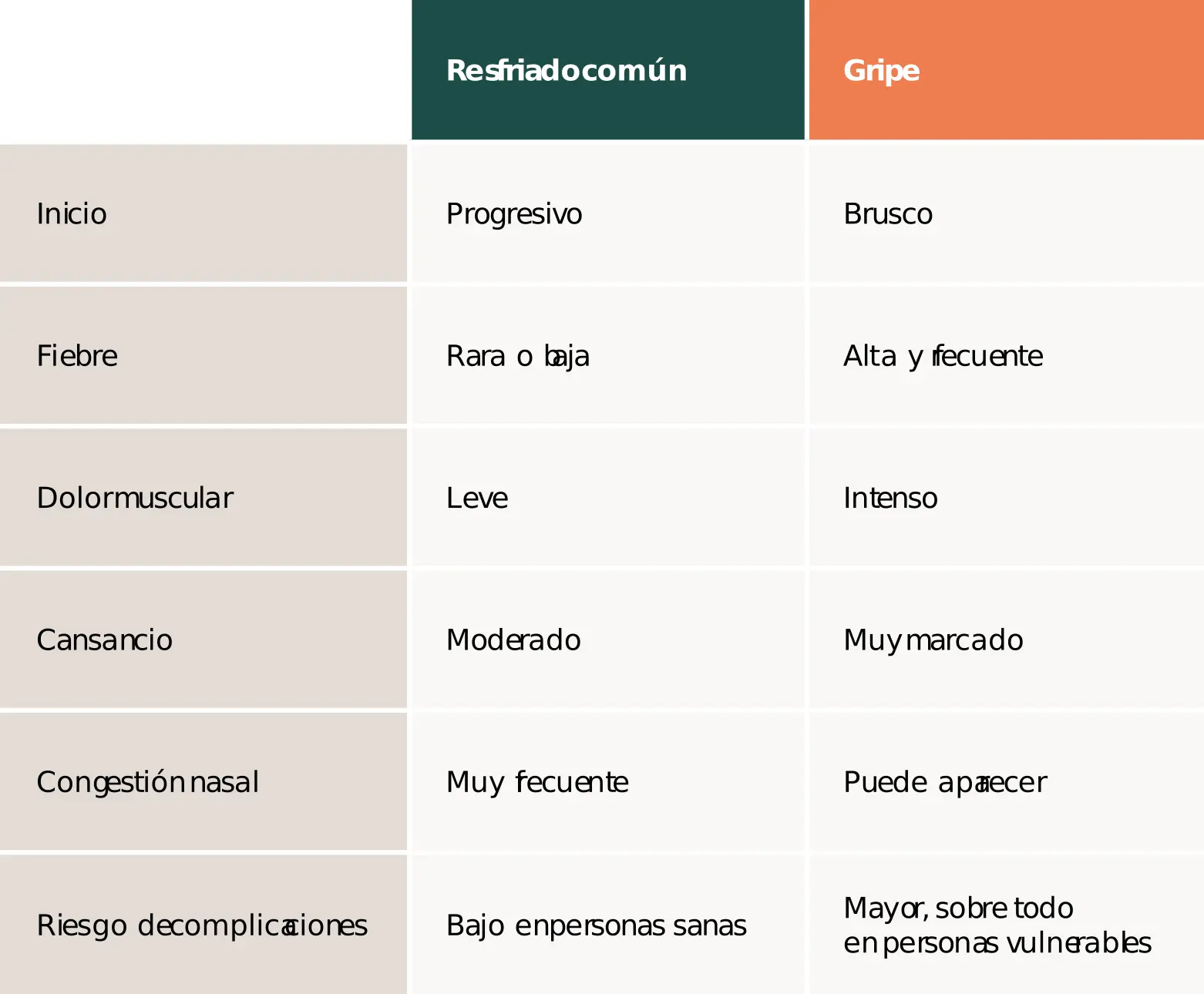
The flu can lead to complications such as pneumonia, decompensation of chronic diseases (heart, respiratory, or kidney), or secondary bacterial infections, thus requiring closer monitoring.
When to consult a healthcare professional
Although most cases are managed at home with rest, hydration, and symptomatic treatment, it is important to consult a professional if the following appear:
- Shortness of breath or difficulty breathing
- Chest pain
- Fever that lasts more than 3–4 days or reappears after improving
- Confusion, excessive drowsiness, or dizziness
- Worsening of chronic diseases
- Symptoms in older adults, oncology patients, immunosuppressed people, or those with complex pathologies
In these cases, medical assessment allows early detection of complications and adjustment of treatment.
Prevention and care at home
In both the flu and the cold, measures at home are key:
- Frequent hand washing
- Ventilating rooms
- Covering up when coughing or sneezing
- Avoiding close contact with vulnerable people
- Rest and good hydration
Annual flu vaccination is the main tool to prevent severe forms of the flu, especially in at-risk populations.
Proper management at home, with monitoring of symptoms and access to healthcare when necessary, allows safe recovery and reduces complications, while also protecting the family environment.

If you have respiratory symptoms or need clinical assessment and nursing care without leaving home, the Galeneo team can offer you diagnosis, monitoring, and home healthcare with the safety and peace of mind that your situation requires.
Do you want to know more about our services? Visit our services page or contact us directly.
Bibliography
- Farmacèutica, P. G., & Farmacèutica, P. G. (2026, 2 February). ¿Qué diferencia hay entre gripe y resfriado? Farmaceuticonline. https://www.farmaceuticonline.com/es/diferencia-gripe-resfriado/
- ¿Gripe o resfriado? Claves para diferenciarlos en Niños y saber cómo tratarlos. (n.d.). Blogs Quirónsalud. https://www.quironsalud.com/blogs/es/aventura-madre/gripe-resfriado-claves-diferenciarlos-ninos-saber-tratarlos
- Eccles R. (2005). Understanding the symptoms of the common cold and influenza. The Lancet. Infectious diseases, 5(11), 718–725. https://doi.org/10.1016/S1473-3099(05)70270-X
- The difference between a cold and the flu. (2026, 23 January). UCLA Health. https://www.uclahealth.org/news/article/difference-between-cold-and-flu