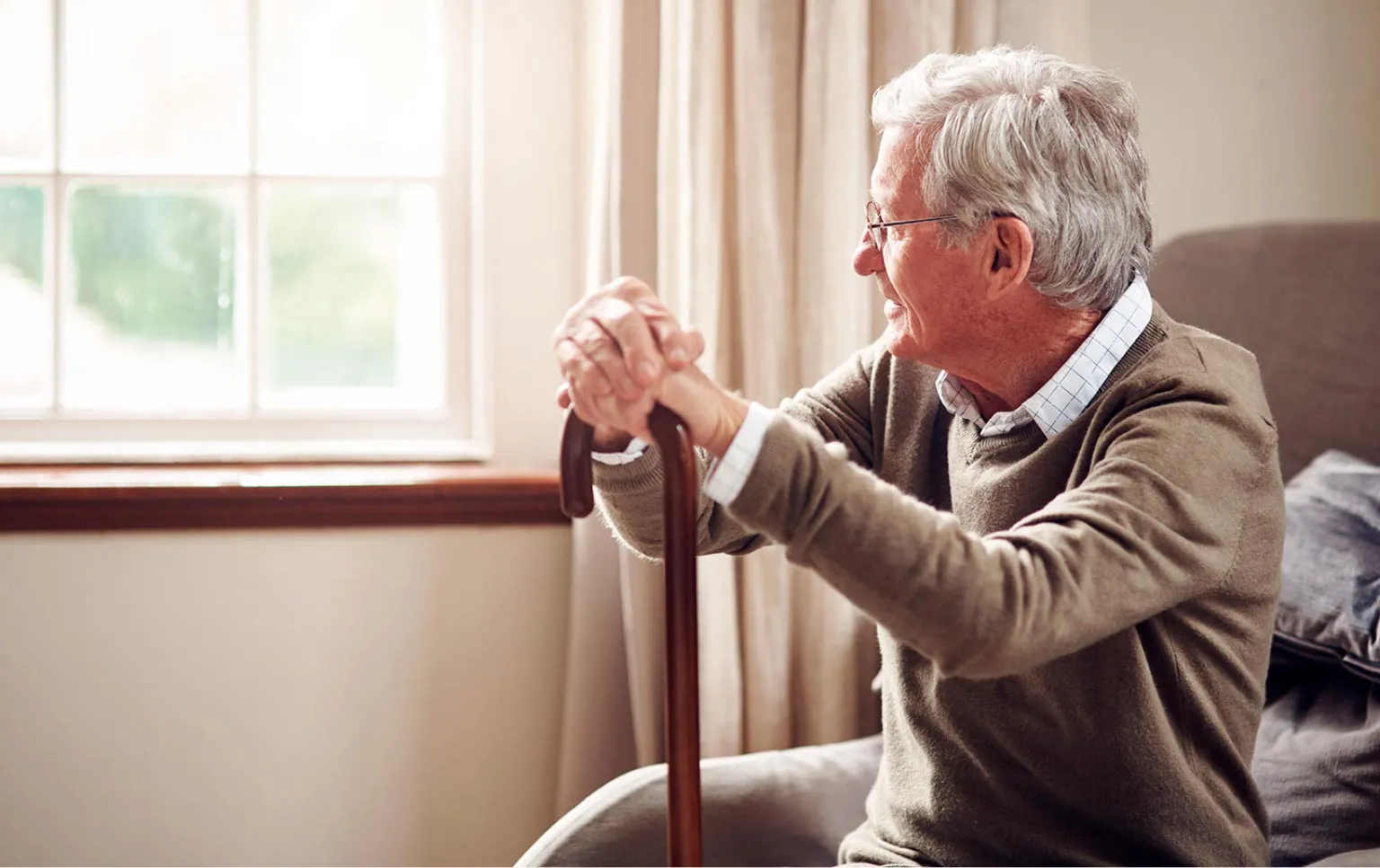
What Is Senile Dementia and How It Can Be Cared for at Home
The term “senile dementia” is a general expression used to describe the progressive decline of cognitive functions associated with neurodegenerative diseases, with Alzheimer’s being the most common cause. It is not part of normal aging, but rather a brain disorder that affects memory, thinking, orientation, and the ability to perform daily activities.
As the condition progresses, the person may experience frequent memory loss, difficulty communicating, disorientation in familiar places, behavioral changes, and a gradual loss of independence. This process not only affects the patient but also their family environment, which often takes on a key caregiving role.

Most Common Symptoms of Dementia
Although each person progresses differently, some common signs include:
- Memory loss that interferes with daily life
- Difficulty planning or solving simple tasks
- Language problems or trouble finding words
- Disorientation in time and space
- Changes in mood, personality, or behavior
- Difficulty performing everyday activities (dressing, cooking, managing money)
If these symptoms appear, it is important to seek medical evaluation, as an early diagnosis allows for better care planning.
Can a Person with Dementia Be Cared for at Home?
In many stages of the disease, the home is the most suitable environment for a person with dementia. Remaining at home reduces confusion, maintains familiar routines, and provides a sense of emotional security.
Home care allows the environment to be adapted to the patient’s needs and helps avoid sudden changes that may cause confusion or anxiety.
Key Principles for Dementia Care at Home
1. Regular Medical Follow-Up
Dementia requires periodic clinical monitoring to adjust treatments, assess behavioral symptoms, and detect complications (infections, dehydration, falls, etc.).
2. Structured Routines
Maintaining consistent schedules for meals, rest, and activities helps reduce anxiety and improves orientation.
3. Home Adaptation
Some important measures include:
- Good lighting
- Removing obstacles and rugs that may cause falls
- Labeling rooms (bathroom, bedroom)
- Supervising the use of kitchen appliances or electrical devices
4. Simple and Calm Communication
Short sentences, eye contact, and a calm tone make understanding easier. Constantly correcting or arguing may increase frustration.
5. Support for the Caregiver
Caring for a person with dementia can lead to physical and emotional strain. Having healthcare professionals provide home care helps share responsibilities, resolve doubts, and prevent caregiver burnout.
The Role of Home Healthcare
Healthcare professionals at home can assist with:
- Medical management of associated conditions
- Monitoring overall health status
- Educating the family on caregiving
- Early detection of clinical or behavioral changes
This support helps maintain the patient’s quality of life and provides reassurance to the family.
Caring with Dignity and Support
Dementia is a progressive disease, but a stable environment, professional support, and personalized care can make a significant difference in the patient’s well-being.
Caring at home does not mean doing it alone. With proper guidance, the home can become a space of protection, respect, and quality of life.
Learn how our medical and nursing team can support the care of older adults with cognitive decline at home. Visit our services page or contact us directly.
Bibliography
- Senile Dementia - an overview | ScienceDirect Topics. (n.d.). Www.sciencedirect.com. https://www.sciencedirect.com/topics/neuroscience/senile-dementia
- Pouw, M. A., Calf, A. H., van Munster, B. C., Ter Maaten, J. C., Smidt, N., & de Rooij, S. E. (2018). Hospital at Home care for older patients with cognitive impairment: a protocol for a randomised controlled feasibility trial. BMJ open, 8(3), e020332. https://doi.org/10.1136/bmjopen-2017-020332
- Wang, X., Stewart, C., & Lee, G. (2024). Patients' and caregivers' perceptions of the quality of hospital-at-home service: A scoping review. Journal of clinical nursing, 33(3), 817–838. https://doi.org/10.1111/jocn.16906